
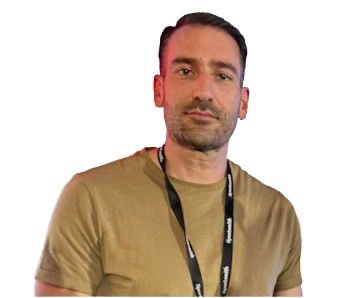
Nikolaos Lekatsas
Nikolaos Lekatsas is a PhD Candidate in Sports Science at Aristotle University of Thessaloniki. He holds two Master of Science (MSc) degrees: the first in Exercise and Health from the University of Thessaly, with specialization in the use of GPS systems in football, and the second in Training and Injury Prevention in Football from Aristotle University of Thessaloniki. He has actively participated in numerous scientific conferences in Greece and abroad, presenting research and following the latest developments in the field of sports science.
At the same time, he holds a UEFA A coaching license, a FIFA Diploma in Football Medicine, and a Strength & Conditioning Coach certification (IUSCA). He specializes as a strength and conditioning coach in football.
He worked for four years as Head of Performance at Panetolikos FC, and currently works as a fitness coach for Olympiacos B. His research interests focus on training load management aimed at maximizing performance and reducing injury risk in football, as well as designing individualized strength and injury prevention programs based on the specific needs of football players.
Management of training load within the microcycle
In modern football, the effective management of training load during the microcycle is a critical factor for both player performance and availability. Despite the widespread use of technologies such as GPS, player monitoring is not limited only to external load metrics, but requires a comprehensive and multifactorial approach throughout the week.
This presentation focuses on the overall monitoring of players within the weekly microcycle, combining external and internal load data, recovery indicators, and match demands. Practical models of microcycle planning, methods for integrating data into the daily training process, and strategies for individualizing training stress will be presented.
The aim is to provide an applicable framework that helps coaches make evidence-based decisions, manage fatigue effectively, and support consistent player performance, while simultaneously reducing the risk of injuries.